June 6, 2025
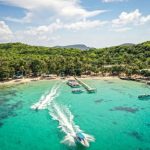
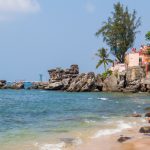
Phu Quoc’s history has been told countless times. But let’s be honest – if you’re visiting this island, chances are you’re more interested in comparing sandy shorelines and figuring out the ultimate beach spot: Ba Keo or Bai Sao?
Phu Quoc is a dream destination for seafood lovers. You can dive into the flavors at Ra Khoi Seafood Phu Quoc or Crab House Phu Quoc with its Cajun twist. When it comes to places to stay, resorts on Phu Quoc are perfect – and hey, don’t skip the in-house dining at The Spice House in Cassia Cottage. Oh, and let’s not forget – Phu Quoc is home to the famous bun quay. You can try Bun Quay Kien Xay right in the heart of Duong Dong Town, known as the original spot, or head to Bun Quay Thanh Hung – just a ten-minute stroll away.
But your quick getaway to Phu Quoc isn’t just about lounging by the pool. Sure, resort life on the island is as relaxing and sun-kissed as it gets, but even the biggest beach bums need a break to explore sometimes. Knowing a bit about Phu Quoc’s history makes the adventure even better. To mix things up, let’s dive into Phu Quoc’s history – in reverse!

Phu Quoc Becomes an Island City
Vietnam’s islands are in fierce competition to win over tourists. There’s the remote charm of Con Dao, floating quietly off the coast of Vung Tau. Or newer rising stars like Phu Quy Island, 120 km from Phan Thiet, which only recently opened to visitors.
But Phu Quoc? It’s the heavyweight champion – Vietnam’s largest island, sprawling over 567 square kilometers. It’s grown so quickly that in March 2020, Vietnam’s National Assembly officially upgraded Phu Quoc to the country’s first island city.
And honestly, you feel it. This place isn’t just a sleepy beach escape anymore – it’s buzzing with energy, luxury resorts, and adventure waiting at every turn.
The Hottest New Destination In Vietnam Becomes A UNESCO Biosphere Reserve
Already, by 2010, the international media were warming up to Phu Quoc Island. That year the Los Angeles Times decided that Phu Quoc: “is the hottest new tourist destination in Vietnam” and noted the island’s “mile after mile of wide, uncrowded beaches, dense jungle, virgin rainforests and a lazy, laid-back atmosphere.”
In the north of the island, far from many Phu Quoc Island resorts that can be found lining Long beach, is an area recognized as Phu Quoc National Park. In 2010, around the same time as that Los Angeles Times article, that area was designated as a UNESCO Biosphere Reserve – a designation which helps protect the land, water and natural resources in and around Phu Quoc. In fact, besides covering the area of Phu Quoc’s National Park, the UNESCO Biosphere Reserve covers 105 islands of which Phu Quoc is the largest.

Phu Quoc Through Time: Unveiling Its History in Reverse
Phu Quoc, Vietnam’s largest island, is celebrated today for its stunning beaches, lush jungles, and vibrant culture. But if you look a little closer, you’ll find its history is just as fascinating as its natural beauty. Let’s take a step back through time and explore how this “Pearl Island” evolved from a remote outpost to a top tourist destination..
The Coconut Prison: A Grim Chapter in History
Rewinding to the mid-20th century, Phu Quoc bore witness to some of Vietnam’s darkest days. The infamous Coconut Prison, built by the French colonialists in the 1940s and repurposed during the Vietnam War, housed over 40,000 prisoners.
Conditions were brutal. Prisoners faced unimaginable torture, food deprivation, and extreme punishments. Despite the horrors, some managed daring escapes, digging tunnels beneath the prison walls. The Coconut Prison in Phu Quoc is now a historical monument, standing as a solemn reminder of the island’s wartime struggles and the resilience of its people.
Colonial Influence: French Cochinchina and Phu Quoc
Before the wars, Phu Quoc played a pivotal role during French colonial rule. Under the France-Cambodia Treaty of 1863, the French annexed Phu Quoc, the Mekong Delta, and Ho Chi Minh City, making them part of French Cochinchina.
The French turned Phu Quoc into an agricultural hub, establishing coconut and rubber plantations while bringing Chinese pepper farmers from Hainan to cultivate the land. By the late 19th century, Phu Quoc was firmly under French administration, though it remained a contested region between Cambodia and Vietnam.
It wasn’t until 1949, under a French ruling, that Phu Quoc was officially returned to Vietnam. This period laid the groundwork for the island’s modern-day industries, such as its renowned pepper farms and fish sauce production.
The Tay Son Rebellion: A Refuge for the Nguyen Lords
Traveling further back to the late 18th century, Phu Quoc became a strategic haven during Vietnam’s civil conflicts. The Tay Son Rebellion saw the Nguyen Lords, one of Vietnam’s most powerful families, using the island as a retreat.
Nguyen Anh, who later became Emperor Gia Long, repeatedly sought refuge on Phu Quoc between 1782 and 1786 while battling the Tay Son rebels. During these years, Phu Quoc was not just a sanctuary but a base for rallying forces to reclaim Vietnam. This turbulent era marked the island’s growing importance in the country’s political and military history.
The Khmer Roots: Phu Quoc’s Origins as Koh Tral
Even further back in history, Phu Quoc was known as Koh Tral under the Khmer Empire. The island was sparsely populated, with small fishing communities and agricultural settlers. The Vietnamese first began to settle Phu Quoc in the 1600s, although it took nearly 20 more years before they were officially allowed to establish settlements.
By the 17th century, Phu Quoc had become a melting pot of cultures. Vietnamese settlers integrated with the Khmer people, and Chinese communities also began to flourish. This cultural fusion continues to shape Phu Quoc’s identity today, making it an exciting place for visitors to explore.
Phu Quoc: A Journey Through Time
From Koh Tral to a French colony, from the Coconut Prison to a UNESCO Biosphere Reserve, Phu Quoc’s journey through history is one of transformation, survival, and resilience. Today, Phu Quoc stands as a vibrant and thriving luxury destination with a rich cultural history that reflects both its past and present.
Whether you’re exploring the pristine landscapes of Phu Quoc National Park, learning about its dark past at Coconut Prison, or indulging in Phu Quoc’s famous fish sauce and pepper, there’s a rich tapestry of history and culture waiting for you at every corner of the island.
So, when you visit Phu Quoc (or Fukok Island Vietnam, as it’s sometimes known), take a moment to reflect on the history of Phu Quoc, a place that has survived and thrived through centuries of cultural shifts and political change. The island’s enduring legacy, combined with its natural beauty, makes it a truly unique destination.
Is Phu Quoc in Vietnam or Cambodia?
This is a common question asked by many travelers when planning their trip. The answer is simple: Phu Quoc is in Vietnam, although its history and early settlements were influenced by Cambodia and the Khmer Empire. Today, Phu Quoc is an integral part of Vietnam, serving as a prominent tourist destination and holding a significant place in the country’s cultural and economic landscape.
Whether you’re lounging by the beach, diving into Phu Quoc’s underwater world, or soaking up the local history, you’re experiencing a place that has undergone incredible transformations over centuries. Phu Quoc’s rich history, stunning landscapes, and vibrant culture make it not just a beach destination, but a place where every corner tells a story.
For an unforgettable stay, Cassia Cottage is the perfect base, combining luxury with the laid-back island vibe, allowing you to experience everything Phu Quoc has to offer in comfort.